GOTS certification and bags: what it actually covers
GOTS gets mentioned a lot in sourcing emails, and not always correctly. Here's what the standard actually certifies, and how to check it for yourself.

“GOTS certified” appears on a lot of product pages. It's a genuine, respected standard, which is exactly why it's worth knowing what it actually promises, and what it doesn't.
In this guide: What is GOTS? · What it doesn't mean · GOTS vs GRS: know the difference · How to verify a supplier's claim · Cost and lead time · Practical tips for buyers · Questions buyers ask us
What is GOTS?
GOTS stands for Global Organic Textile Standard. It certifies organic fibre content and responsible processing through the supply chain: farming, spinning, dyeing, finishing and labelling, including rules on chemical inputs and wastewater treatment. It's one of the most recognised organic textile standards in the world.
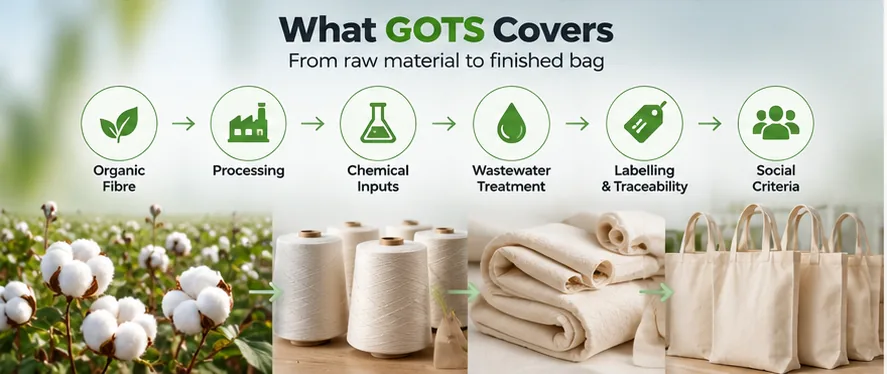
It also includes social criteria for workers at certified facilities: things like fair wages, safe working conditions and no forced or child labour.
What it doesn't mean
GOTS certifies organic fibre and the processing of that fibre. It does not, by itself, mean recycled content (that's a different standard, GRS), and it isn't a general-purpose “eco” stamp for anything made from natural materials. A jute bag, for example, isn't typically GOTS certified, because GOTS applies to organic fibres under its own scope, which centres on organic cotton and similar fibres.
A company can also be GOTS certified without every product it sells being certified. Certification applies to specific certified goods, tracked through the supply chain with transaction certificates. It's fair to ask, for the specific bag you're buying, whether it's covered.
GOTS vs GRS: know the difference
| GOTS | GRS | |
|---|---|---|
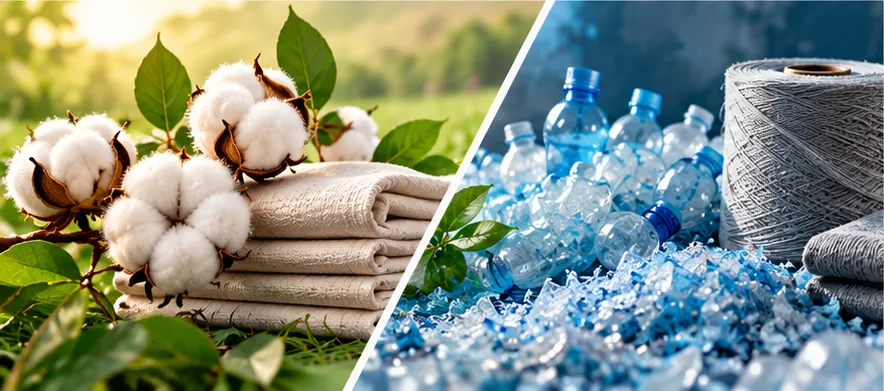
| Certifies | Organic fibre content and processing | Recycled content and responsible production |
| Typical fibre | Organic cotton | Recycled cotton or recycled polyester |
| Also covers | Chemicals, wastewater, labour | Chain of custody, chemicals, labour |
A bag could, in principle, carry both: organic cotton blended with recycled content. Ask specifically what each certification is covering on your bag.
How to verify a supplier's claim

- Ask for the current certificate (certificates have an expiry date and a scope).
- Ask for the transaction certificate for your specific order, which links your shipment to certified fibre.
- Check the certifying body's own database where available.
- Ask what exactly is certified: the fibre, the facility, or both.
Our production facility is certified to GOTS, GRS, ISO 9001:2015 and ISO 14001:2015, and is Jute Mark India certified; it is also SMETA/SEDEX 4-Pillar audited (an audit rather than a certificate). We share certificate scope on request.
Cost and lead time
Certified organic cotton fabric usually costs more than conventional cotton, and a transaction certificate takes a little paperwork time per order. If a certified claim matters for your market, build that into your planning and tell your supplier at enquiry stage, since it affects which fabric batch is used.
Practical tips for buyers
- Decide if you need the whole bag certified, or just the main fabric.
- Ask early. Certified fabric sourcing takes planning.
- Keep the transaction certificate for your own records and any audits your retailer requires.
- Be wary of a certificate with no expiry date or scope shown.
Certification is a useful, verifiable fact, not a marketing word. Asking a few direct questions is the quickest way to know what you're actually buying.
A bit of plain talk: we'd be suspicious of any supplier who can't produce a certificate within a day of being asked. A genuinely certified facility has that document on file and ready; it shouldn't take a week to surface.
Questions buyers ask us
What does GOTS certify?
Organic fibre content and responsible processing through the supply chain, including chemical inputs, wastewater treatment, labelling, and social criteria for workers.
What's the difference between GOTS and GRS?
GOTS certifies organic fibre such as organic cotton. GRS certifies recycled content, such as recycled cotton or polyester.
Is Trenova Exim GOTS certified?
Our production facility is certified to GOTS, GRS, ISO 9001:2015, ISO 14001:2015 and Jute Mark India, and is SMETA/SEDEX 4-Pillar audited. Certificate scope is shared on request.
How do I check a GOTS certificate is real?
Ask for the current certificate and the transaction certificate for your order, and check the certifying body's own database where one is available.
Tell us what you need.
Product, quantity and destination is enough to start. We review your requirement and reply with a quotation.