
Printed Jute Bags: Common Print Problems and How to Avoid Them
Jute is strong and full of character, but small printing mistakes show up fast on a coarse, tan weave. Here are eight common problems, why they happen and how to avoid each one.
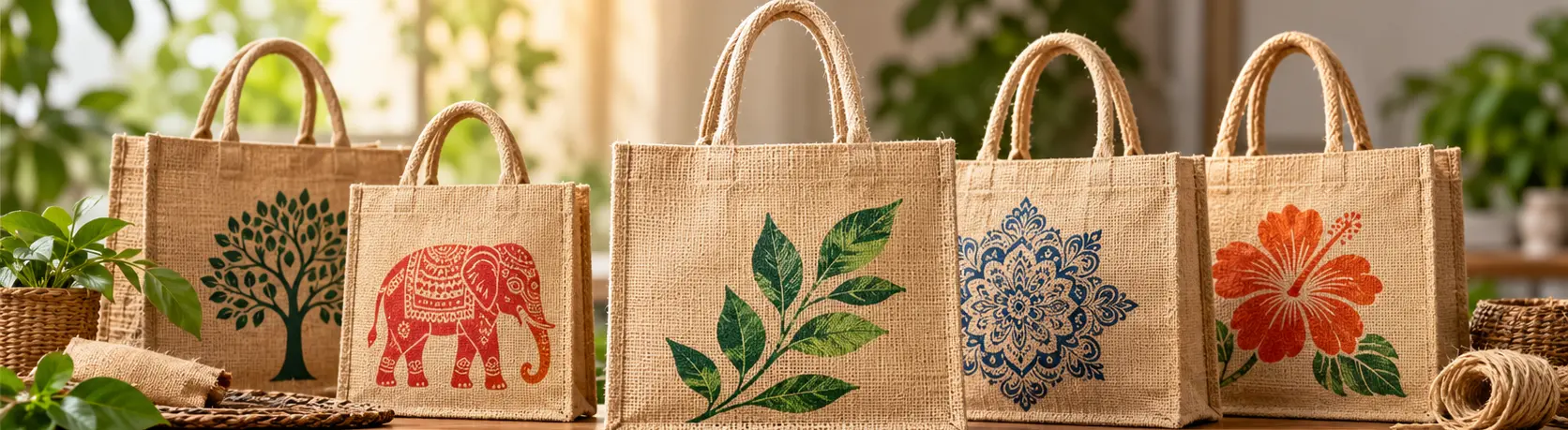
Jute is strong, natural and full of character, but printing on it is nothing like printing on paper or smooth cotton. The weave is coarse, the fibre is tan and the surface is uneven, so small mistakes show up fast.
If you plan to order printed jute bags for your store, brand or event, knowing the common print problems helps you prevent them before production starts. This guide explains eight problems buyers face, why they happen and how to avoid each one.
In this guide: Why printing on jute is different · Problem 1: Patchy or uneven ink · Problem 2: Lost fine detail · Problem 3: Dull or different colours · Problem 4: Fading and rubbing off · Problem 5: Smudging and bleeding · Problem 6: Crooked or misaligned prints · Problem 7: Cracking where the bag folds · Problem 8: Heavy feel or smell from thick ink · Choose the right print method · Artwork checklist for custom orders · Sample and approval process · Working with the right partner · Frequently asked questions · Conclusion
Why printing on jute is different
Jute has an open, textured weave and a natural brown tone. Ink sits on uneven fibres, light colours compete with the dark background, and bags rub against things during daily use. A good print works with these traits, not against them. Buyers of jute bags wholesale often discover this only after the first batch arrives, which is why planning matters.
Problem 1: Patchy or uneven ink
Why it happens: the coarse weave leaves tiny gaps that ink does not fill.
How to avoid it: choose bold, solid shapes, ask for a suitable ink thickness and test the print on the actual fabric, not on a smooth sample.
Problem 2: Lost fine detail
Why it happens: thin lines, small text and gradients blur or disappear on a textured surface.
How to avoid it: keep lettering large and lines thick, and simplify the artwork. Ask your jute bags manufacturer for the minimum line thickness and text size before you finalise the design.
Problem 3: Dull or different colours
Why it happens: the brown background mutes light and pastel shades, and white ink can look thin.
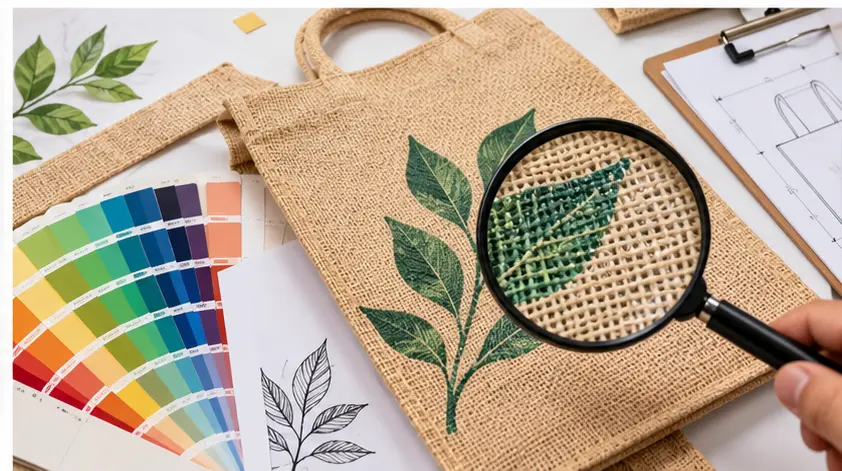
How to avoid it: choose darker, saturated colours or request a white base layer. For jute promotional bags in brand colours, give Pantone references, but judge the result on a physical sample, because screen colours never match fabric.
Problem 4: Fading and rubbing off
Why it happens: ink that is not fully cured, the wrong ink type or constant abrasion wears the print away.
How to avoid it: grocery bags face constant rubbing, so ask about ink type and curing, then run a simple rub test and a light water test on samples.
Problem 5: Smudging and bleeding
Why it happens: wet ink spreads along the fibres, or bags are stacked before the ink dries.
How to avoid it: allow full drying time before packing, and never stack bags while the ink is fresh.
Problem 6: Crooked or misaligned prints
Why it happens: a loose weave stretches, and manual placement varies from bag to bag.
How to avoid it: agree placement measurements, such as the distance from the top edge and the centre line, and approve them on a sample. This matters even more for multicolour jute promotional bags, where colours must line up.
Problem 7: Cracking where the bag folds
Why it happens: a thick ink layer sitting across a fold line or gusset flexes every time the bag is opened, and it cracks over time.
How to avoid it: keep the print on the flat front panel, clear of folds, gussets and seams, and flex the sample a few times before you approve it. On our jute bags any lamination is on the inside only, so the print always sits on the natural jute face. Our guide to laminated vs non-laminated jute bags explains the difference.
Problem 8: Heavy feel or smell from thick ink
Why it happens: large solid areas need thick ink layers, which can feel stiff and hold odour.
How to avoid it: reduce solid coverage, use lighter artwork and let printed bags air before packing.
Choose the right print method
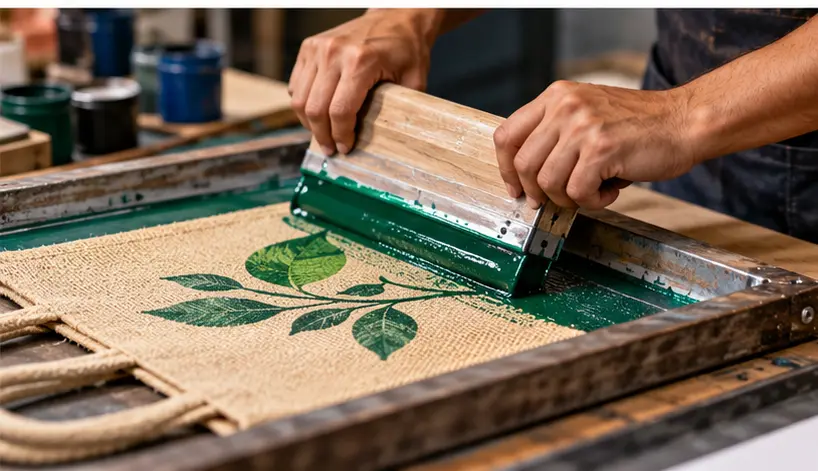
The best method for printed jute bags depends on your artwork, bag finish and budget. A knowledgeable jute bags manufacturer will recommend one, but it helps to know the options.
| Method | Best for | Watch out for |
|---|---|---|
| Screen printing | Bold logos, one to three colours, large runs | Fine detail and many colours |
| Digital printing | Multi-colour artwork on smaller runs | Loses fine detail on the open jute weave, so test on a sample |
| Embroidery or woven label | Premium, textured look | Limited detail and higher cost |
Retail buyers of jute shopping bags wholesale often pair a simple screen-printed logo with a woven label for a cleaner, more premium finish. If you are buying for shelves, our guide to jute shopping bags wholesale covers sizes and styles.
Artwork checklist for custom orders
Well-prepared artwork is the cheapest way to improve custom jute bags. Send your supplier:
- Vector files such as AI, EPS or PDF
- Text converted to outlines
- Pantone references for each colour
- A limit of one to three colours where possible
- A placement drawing with measurements
- Key elements kept clear of seams and handles
Want to see it before you order? Use the Trenova Exim Bag Studio to design your custom jute bags online. Upload your logo, choose the bag and preview roughly how your design will sit on it. Share the design with our team and we will send you a quotation.
Sample and approval process
Never approve a bulk order from a screen mockup. A reliable jute bags supplier will send a pre-production sample made on the actual jute and finish. Check the print by rubbing it, flexing the bag, testing with a little water and smelling the bag after unpacking.
Approve printed jute bags in writing, because that sample becomes your quality standard. When you compare jute bags wholesale quotes, check whether sampling and inspection are included in the price. Our sample approval checklist covers size, fabric, stitching and print.
Working with the right partner
Choose a partner who shows previous printed work and gives specifications in writing. A dependable jute bags supplier will tell you when a design will not print well and suggest a better option, which saves money and returns.
Frequently asked questions
Why do colours look different on jute?
The natural brown background changes how colours appear, so approve colours on a physical sample.
Which print method is best for printed jute bags?
Screen printing suits bold logos in one to three colours. Digital printing handles multi-colour artwork, though fine detail softens on jute.
Can jute promotional bags carry full-colour photos?
Photos lose a lot of detail on the open jute weave. If a photo matters, choose a cotton or canvas bag, or a juco bag with a smooth cotton front panel, which print far more sharply.
Will the print on jute shopping bags wholesale orders last?
With the right ink and proper curing, yes. Ask for a rub test on your sample to check.
What artwork does a jute bags manufacturer need?
Vector files, Pantone references and a placement drawing with measurements.
Can I order custom jute bags with a small print run?
Often yes, but small runs cost more per bag, so ask about a trial order.
Conclusion
Most print problems on jute come down to artwork, ink and approval, and all three are easy to control with some planning. Keep designs bold, give clear specifications and test a sample before you commit.
Choose a trusted jute bags supplier, compare jute bags wholesale quotes on sampling and quality as well as price, and approve printed jute bags only when the sample passes your tests. Open the Trenova Exim Bag Studio to add your logo, pick a size and see your design before you order, or request a quote with your product, quantity and destination.
Tell us what you need.
Product, quantity and destination is enough to start. We review your requirement and reply with a quotation.