
Pantone colour matching for bags, and why lab dips exist
Your brand green is a number in a style guide. Getting that number onto natural fabric is a small craft of its own. Here is how it works.
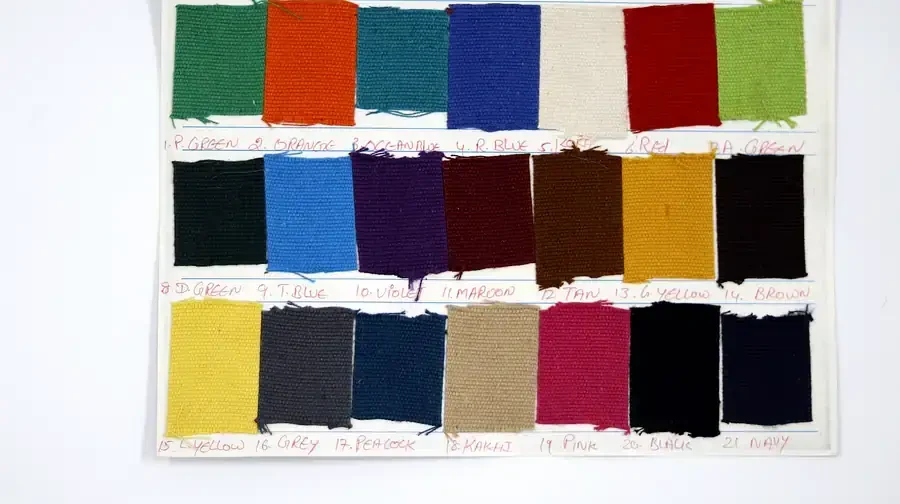
Ask ten people to picture “forest green” and you get ten greens. Pantone exists to stop that. Every colour gets a number, you and the factory look at the same number, and the argument is over before it starts.
Well, almost. With fabric there is one more step, and that's the lab dip.
In this guide: Two kinds of Pantone code · So what is a lab dip? · Why fabric never matches the chip exactly · What this means on jute · How to approve a lab dip in five minutes · Questions buyers ask us
Two kinds of Pantone code
This trips up a lot of people, so let's get it straight first.
Codes ending in C or U (like Pantone 349 C) come from the graphics system. They describe ink on paper: C for coated, U for uncoated. Your logo is probably defined like this, and it's what we use to match printing ink.
Codes ending in TCX or TPG (like 19-4052 TCX, Classic Blue) come from the fashion and textile system. TCX means cotton: the colour was set on cotton fabric. TPG is the same colour printed on paper. If you want the bag fabric itself dyed to a colour, this is the code to send.
Only have a C code and want dyed fabric? That's fine. Send it, and we'll find the nearest textile shade and show you.
So what is a lab dip?
A lab dip is a small piece of your fabric, dyed to your target colour, and sent to you to approve before the whole lot is dyed. Often you'll get two or three versions side by side, slightly different, and you pick the closest. Sometimes it takes a second round.
It sounds slow. It's actually the fast route, because the alternative is dyeing hundreds of metres, cutting bags, and only then finding the green has a blue cast.
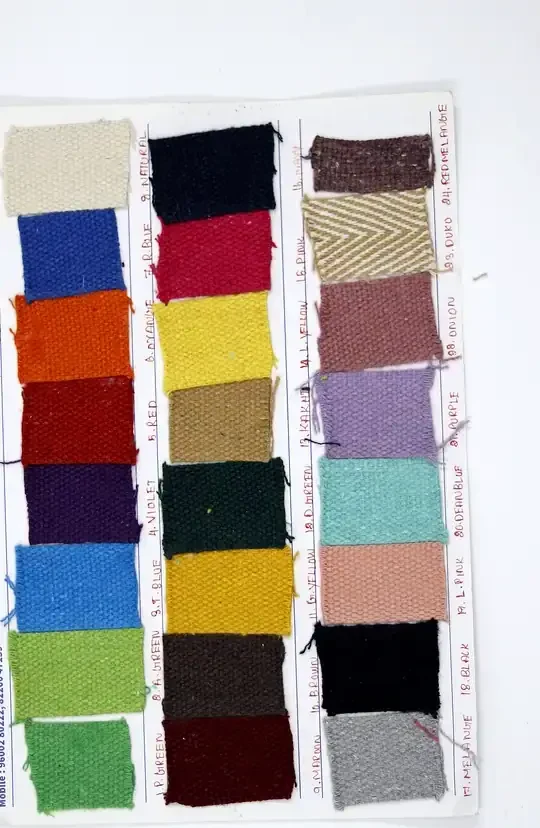
Why fabric never matches the chip exactly
Three reasons, all normal:
- The fibre. Cotton, jute and juco take dye differently. A Pantone chip made on cotton will look a touch different on jute, which is coarser and has its own natural colour underneath.
- The texture. Rough fabric scatters light. The same colour looks a bit darker and less shiny on jute than on smooth cotton.
- The light. A colour can change between daylight, a shop's LED and your office tube light. (The technical word for this is metamerism.) That's why you approve colour in daylight, or in a light box with a standard daylight setting.
The match is approved on a lab dip or sample, because fabric and dye affect the result. Nobody can promise a perfect match to a paper chip on a natural fibre, and you should be a little wary of anyone who does.
What this means on jute
Natural jute is golden brown. Dark and rich colours (black, navy, bottle green, maroon) come out well on it. For bright or very pale colours, the jute is usually bleached first so the colour has a lighter base to sit on. Pastels on unbleached jute tend to look muddy.
Natural fibre also varies a little from batch to batch, so for a repeat order next year, keep your approved swatch and send a photo with it. We match to that.
How to approve a lab dip in five minutes
- Wait for daylight. Near a window, out of direct sun.
- Put your reference (the Pantone book, an old bag, a printed brand card) right next to the swatch.
- Squint. Seriously. Squinting removes the texture and shows you if the colour is lighter, darker, warmer or cooler.
- Tell us in those words: “B is closest, slightly too yellow” is perfect.
- Keep the approved swatch.
Not dyeing the fabric, only printing a logo? Then you approve the ink colour on the printed sample instead. Same rules: daylight, side by side, and keep it.
One thing we'd say plainly: if a supplier promises an exact Pantone match on jute, sight unseen, be a little sceptical. Nobody can promise that honestly. A second round on the lab dip isn't a failure, it's just what dyeing a natural fibre involves, and we'd rather tell you that upfront than have you find out after the fabric's already cut.
Questions buyers ask us
What is a lab dip?
A small piece of your fabric dyed to your target colour and sent for approval before the full fabric is dyed. You often get two or three versions to choose from.
Which Pantone code should I send for a dyed bag?
A textile code ending in TCX is best for dyed fabric. If you only have a graphics code ending in C, send that and we show you the nearest textile shade.
Can you match any Pantone colour on jute?
Dark and rich colours dye well on jute. For bright or pale shades the jute is usually bleached first. The final shade is always approved on a lab dip or sample.
Will a repeat order be the same colour?
Natural fibres vary slightly between dye batches. Keep your approved swatch and we match the repeat order to it.
Tell us what you need.
Product, quantity and destination is enough to start. We review your requirement and reply with a quotation.